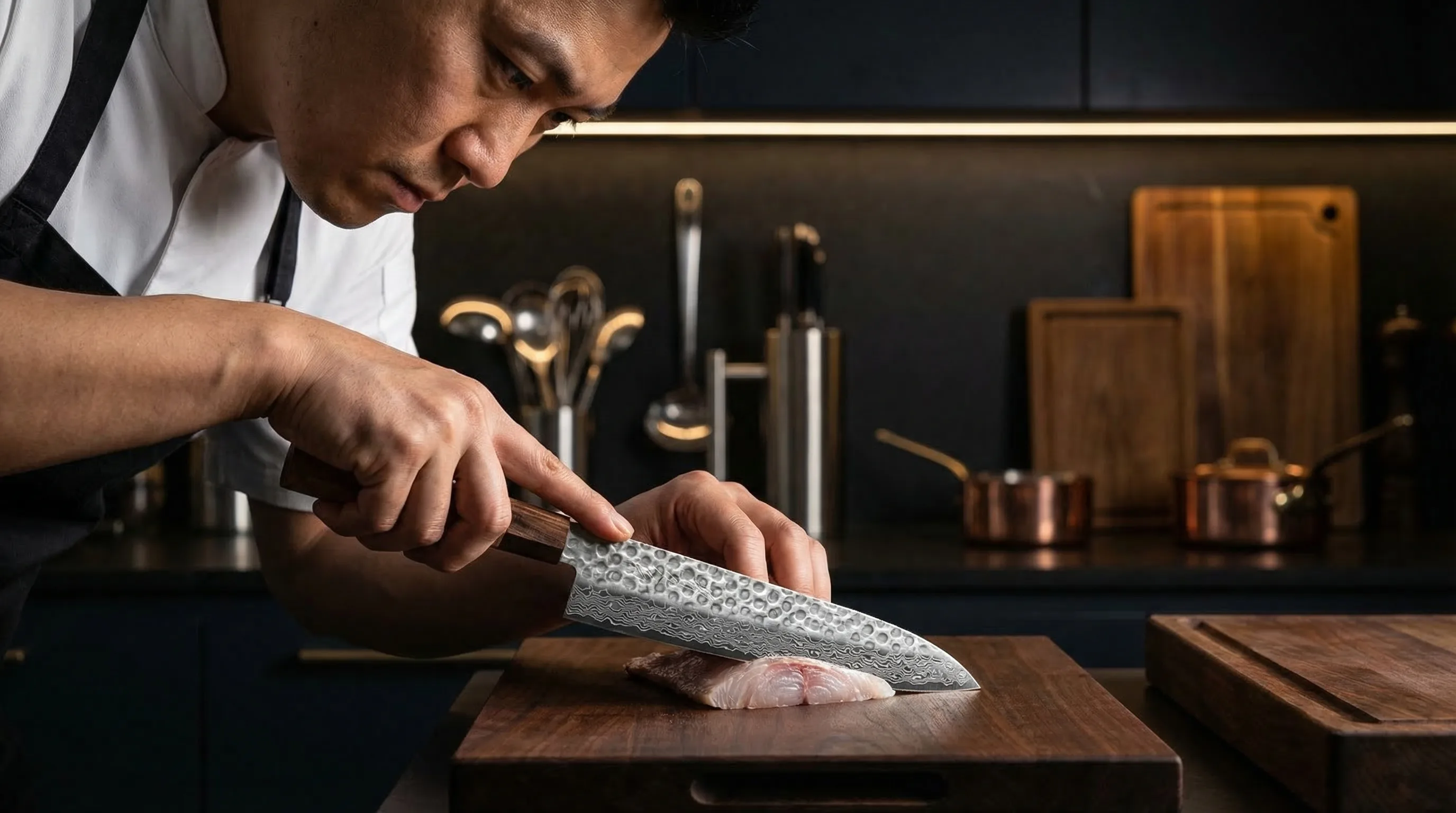
Kitchen and home products live in a buyer's daily life. A+ Content for these categories has one primary advantage: the lifestyle context is immediately relatable. The job is to show buyers exactly where your product fits in their space.
Updated: April 2026
What Home Product A+ Content Does Differently
Home buyers aren't just evaluating features — they're evaluating fit. Does this match my kitchen? Will this work in my space? Is this the right size for how I actually cook? A+ Content answers these questions better than listing images because it has the canvas to show the product in full context.
The Problem
Home product sellers repeat their bullet points in image format — showing product features without showing the product in use in a real environment. This misses the primary conversion opportunity: making buyers visualize the product in their own space.
Who This Is For
Amazon kitchen and home product sellers with brand registry.
Module Strategy for Kitchen and Home
Module 1 (Hook): The product in its ideal setting. For a cast iron pan: Sunday morning kitchen, natural light, someone cooking. The scene sells the lifestyle, not the pan.
Module 2 (Core Selling Points): Product in action — specific features demonstrated, not described.
Module 3 (Scene Proof): The real-use moment. Tuesday night dinner prep. Authentic context, not a styled shoot.
Module 4 (Doubt Removal): Size reference in context. Care instructions shown visually. Compatibility information. Every practical question answered.
Module 5 (Result Proof): What cooking looks like with this product vs without it. The concrete improvement.
Module 6 (Close): The home this product belongs to. The lifestyle it enables.
AI Lifestyle Generation for Home Products
Kitchen lifestyle shots require set styling that's expensive to produce. AI generates these scenes computationally — breakfast counter setting, dinner prep context, styled kitchen shelf — matching the product's positioning.
GreenOnion tip: AI tools like GreenOnion can generate the lifestyle scenes and banner imagery A+ Content requires in minutes, without a photography budget.
Frequently Asked Questions
Should home product A+ Content show the product in use or styled?
Both. In-use shots answer functional questions. Styled shots answer aesthetic questions. The combination drives both functional and emotional purchase decisions.
How do I show size accurately in A+ Content?
Include a module showing the product alongside recognizable reference objects. Size confusion drives returns for home products.
Can I show multiple products from my line in one A+ Content?
Yes — cross-selling through A+ Content is effective for home brands with coordinated product lines.
Build A+ Content without a photography budget
GreenOnion turns a single product photo into the lifestyle scenes, comparison banners, and feature visuals your A+ modules need.
Try A+ Content generation freeRelated Articles
How to Create A+ Content That Actually Sells (2026)
Learn how to create Amazon A+ Content that drives conversions — the 6-module structure, what each module must do, and common mistakes to avoid.
Amazon A+AI Lifestyle Images for Amazon Brand Content (2026)
How to use AI-generated lifestyle images in Amazon A+ Content — scene selection, model integration, and what lifestyle images do for A+ conversion.
Amazon A+Amazon A+ Content in 2026: New Guidelines & The 6-Module Framework for Higher Conversions
Amazon A+ Content is no longer optional — in 2026 it's a requirement for competitive ranking. This guide covers the latest guidelines, the 6-module conversion framework, and how to create a full set in minutes using AI.